Join Elements with Data
These operations join elements with data or restructure data-bound collections.
msc.attach(elem, table)
Attaches an entire data table to a single mark or group.
msc.classify(coll, params)
Classifies the children of a collection into nested collections by a data attribute.
coll: Collectionparams(Object):attribute: data attribute used to classify the collection childrenlayout(Layout, optional): layout for the new nested collections
- Return type: Collection
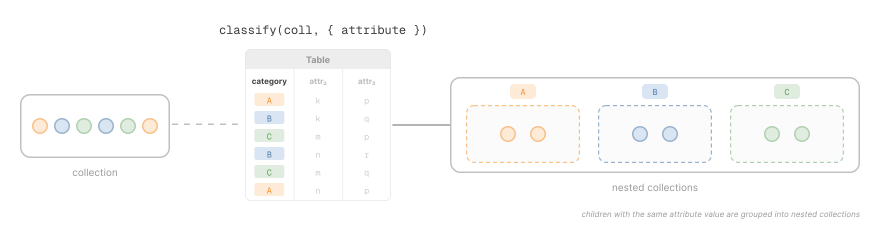
The classify operation groups a collection’s children into nested sub-collections by a data attribute. Children sharing the same attribute value get placed in the same sub-collection.
msc.densify(elem, data, params)
Creates a denser mark from an existing element by a data attribute.
elem: Mark such as a line, circle, or rectdata: DataTableparams(Object, optional):attribute: data attribute used to densify the element, defaults to tuple IDorientation: orientation for densifying rectangle-based elements
- Return type: Mark
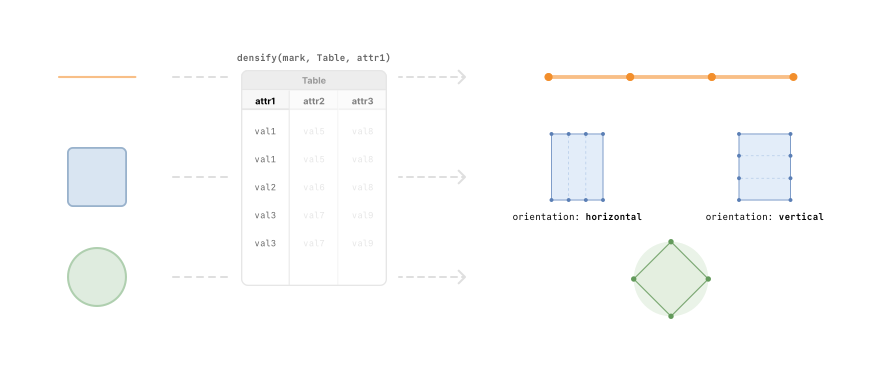
The densify operation adds N vertices along a mark’s boundary, replacing curves with line segments. Each vertex is a peer bound to a unique attribute value. Area marks receive 2N vertices (N per parallel edge).
msc.divide(elem, data, params)
Divides an element by a data attribute and returns both the new mark and the resulting collection.
elem: Markdata: DataTableparams(Object, optional):attribute: data attribute used to divide the element, defaults to tuple IDorientation: orientation for the divide operation
- Return type: object containing
newMark(Mark) andcollection(Collection)
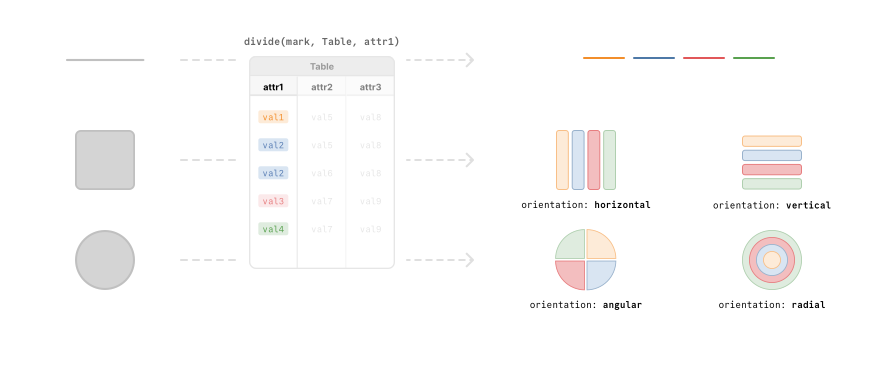
The divide operation splits a mark into N peers within the same spatial area. Output structure depends on the mark type and the orientation parameter. N is the number of unique values in the specified attribute.
msc.repeat(elem, data, params)
Repeats an element across a data table, tree, or network.
elem: Mark, Glyph, Collection, or an array containing a node mark and a link markdata: DataTable, Tree, or Networkparams(Object, optional):attribute: data attribute used to repeat the element, defaults to tuple IDlayout(Layout, optional): layout for repeated collections
- Return type: Collection or Array of Collections
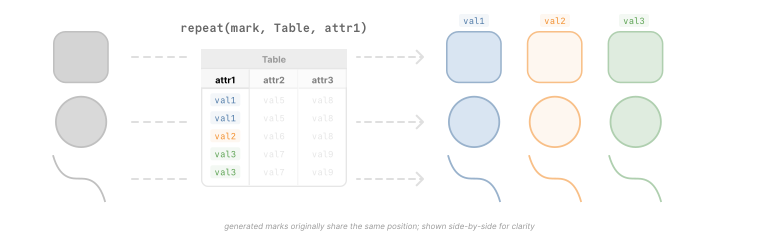
The repeat operation produces N peers — one per unique attribute value. Peers share the same initial position and visual properties; they are shown side-by-side here for clarity.
msc.repopulate(coll, dt, mapping)
Repopulates a nested collection using a new data table and attribute mapping.
coll: Collectiondt: DataTablemapping(Object): maps each collection level to a data attribute- Return type:
void
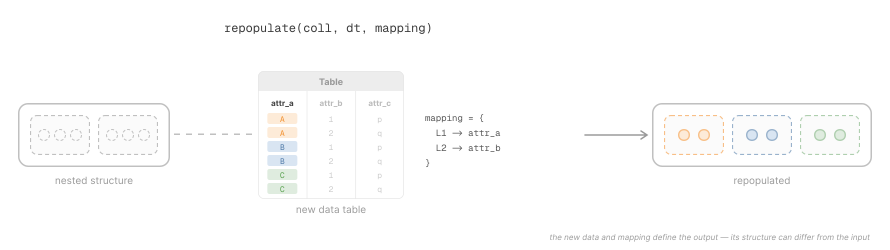
The repopulate operation remaps a nested collection to a new data table, mapping each nesting level to a data attribute. The output structure follows the new data and does not need to match input.
msc.stratify(elem, tree, params)
Creates a stratified collection from a rect, circle, or ring using tree data.
elem: a rect, circle, or ring Marktree: Tree or an array of Tree objectsparams(Object, optional):direction: direction for the strata layoutstartFromLeaf: whether to build strata from leavessize: thickness or size of each stratum
- Return type: Collection
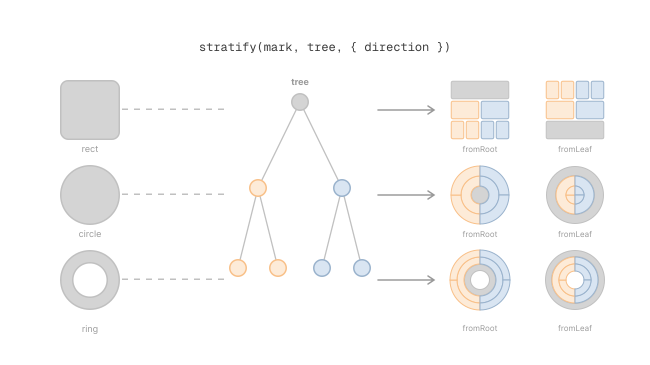
The stratify operation turns a single rect, circle, or ring into a stratified collection from tree data i.e. an icicle, sunburst, or set of nested rings respectively. Each level of the tree becomes a strata, subdivided by branch.